



Skin and soft tissue infections (SSTI) represent one of the most common spectrums of infectious diseases in clinical practice, with a wide range of disease severity: mild cases include ordinary cellulitis and superficial abscesses, while severe cases may lead to necrotizing fasciitis and toxic shock syndrome with an extremely high risk of mortality.
This session will take you to gain an in-depth understanding of the rabbit model of Staphylococcus aureus skin and soft tissue infection (SSTI), to support new drug R&D upgrading and guide clinical trials.
 About SSTI
Within the global diagnosis and treatment system for infectious diseases, SSTI has consistently imposed a heavy medical burden. Data shows that SSTI accounts for 3%–30% of all emergency visits and 11% of infection-related emergency visits, with 25%–40% of patients requiring hospitalization. Even in regions with adequate medical resources, this disease continues to consume medical resources and remains an urgent clinical infectious disease challenge.
Etiological Background: Staphylococcus aureus as the Primary Pathogen
In terms of pathogenic bacteria, Staphylococcus aureus is the key culprit behind SSTI. Since the early 2000s, community-acquired methicillin-resistant Staphylococcus aureus (CA-MRSA) has become the major pathogen for purulent SSTI, completely reshaping the global epidemiological landscape of skin infections. Hypervirulent clones represented by USA300 once triggered infection outbreaks in multiple countries. Although prevalence has declined in developed countries in recent years, the risk of cross-regional strain transmission driven by global circulation still creates long-term and stringent requirements for the development of novel antibacterial agents, anti-infective vaccines and medical anti-infective devices.
Pain Points in Preclinical R&D: Animal Models Determine the Success or Failure of Pharmacodynamic Evaluation
For anti-infective R&D, the selection of preclinical animal models is often the first critical factor determining project outcomes. Unstable models, atypical disease courses and insensitive indicators can distort pharmacodynamic data and even mislead R&D decisions.
Model Achievement Implementation:
Successful Establishment of Standardized Rabbit SSTI Model by KCI・KMQ
To address common pain points in the R&D of Staphylococcus aureus-mediated SSTI, such as poor model reproducibility and insufficient clinical similarity, KCI・KMQ has specially optimized and successfully established a standardized rabbit SSTI infection model based on years of experience in anti-infective CRO services. Leveraging the inherent susceptibility of rabbits to Staphylococcus aureus, this model can highly recapitulate the complete pathological processes typical of human SSTI, including abscess formation, inflammatory infiltration and tissue necrosis. It serves as a stable, reliable and reproducible research tool for preclinical pharmacodynamic evaluation of new antibacterial drugs, anti-infective vaccines and medical anti-infective devices.
01 Core Advantages of the Model: High Clinical Relevance Suitable for Translational Research·Compared with conventional laboratory animals such as mice, the rabbit SSTI model has irreplaceable translational value:It can stably recapitulate the full disease course of skin erythema and swelling, inflammatory infiltration, subcutaneous abscess and tissue necrosis after Staphylococcus aureus infection, closely matching the clinical infection characteristics in humans. It can be applied not only for strain virulence assessment and research on host-pathogen interaction mechanisms, but also for systematic pharmacodynamic verification of various candidate drugs and devices.
·The standardized rabbit SSTI model established in this project has undergone full-process system verification:From exploration of standardized model establishment parameters and dynamic infection monitoring to multi-dimensional indicator detection and positive drug control verification, a stable, reproducible and data-accurate commercial evaluation system has been formed.
02 Comprehensive Detection Indicators to Fully Support Pharmacodynamic EvaluationTo accurately quantify the severity of infection and the effect of drug intervention, we have built a multi-dimensional and comprehensive detection and evaluation system covering three core dimensions: macroscopic phenotype, microbiology and histopathology, which fully meets the requirements of preclinical application data for new drugs and novel devices.
03 Positive Drug Validation Implementation: Full Evidence for Model Stability and EfficacyTo further verify the reliability of the model and the sensitivity of the evaluation system, we have completed control tests with classic positive drugs.


Case Sharing: Staphylococcus aureus SSTI Rabbit Model & Pharmacodynamic Evaluation
·Clinical Phenotypic Assessment on Body Surface
Dynamically monitor changes in the area of skin inflammation and necrosis after infection, continuously record the progression of infection course, subsidence of erythema and swelling, and improvement of necrosis, to intuitively reflect the anti-inflammatory and repair effects of drugs on the body surface.


Accurately detect the bacterial load in subcutaneously infected tissues, quantify the in-vivo bacteriostatic and bactericidal capacity of drugs against Staphylococcus aureus, and provide core quantitative data for the antibacterial efficacy of drugs.
·Histopathological Analysis

·Skin Histopathological Analysis

·Granulation tissue analysis of lesions

·Pathological Results
After intervention with the positive drug, statistically significant improvements were observed in the degree of subcutaneous inflammatory infiltration, integrity of abscess structure and severity of tissue injury in animals. This proves that the model can accurately distinguish effective intervention from blank control, and the pathological evaluation system features high sensitivity.

·Subcutaneous Bacterial Load
The positive drug showed a trend of bacteriostatic improvement: quantitative results of bacterial load in subcutaneously infected tissues showed that no statistically significant difference was observed between the positive drug intervention group and the model group. However, the mean bacterial load in the positive drug group was lower than that in the model control group, indicating a certain in-vivo bacteriostatic trend. This phenomenon suggests that under the current dosing regimen and sampling time point, the positive drug has exhibited potential bacterial inhibitory effects. Subsequent optimization of the administered dose, extension of the dosing cycle or adjustment of specimen collection time points can further amplify the antibacterial effect to obtain statistically significant results.


this rabbit Staphylococcus aureus SSTI model has a high model establishment success rate, small inter-group differences and stable and reliable data.It can accurately distinguish the in-vivo pharmacodynamic differences among different intervention methods, and is fully suitable for preclinical efficacy evaluation of new antibacterial drugs, anti-infective vaccines, medical dressings and devices.
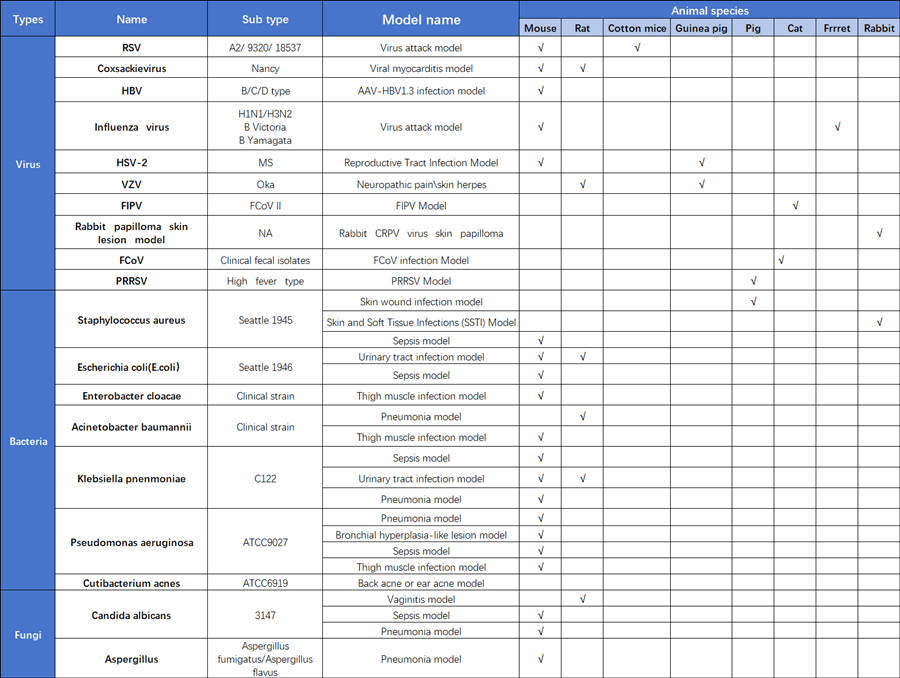
KCI・KMQ Anti-infective Vaccine and Drug R&D Service Platform

·In vitro anti-infective pharmacodynamic tests:antiviral activity - EC50/CC50 detection; MIC susceptibility test; FIC determination; effects on biological characteristics, etc.
·In vivo immunogenicity tests for vaccines:neutralization test, hemagglutination inhibition test, cellular immunity, etc.
·Animal challenge protection tests:for vaccines and antiviral drugs;
·Infectious animal studies.
 Conclusion
If you need the detailed experimental protocol of the model, please leave a message in the comment section, and we will reply to you as soon as possible.